Common Welsh Place Name Prefixes Explained

Author
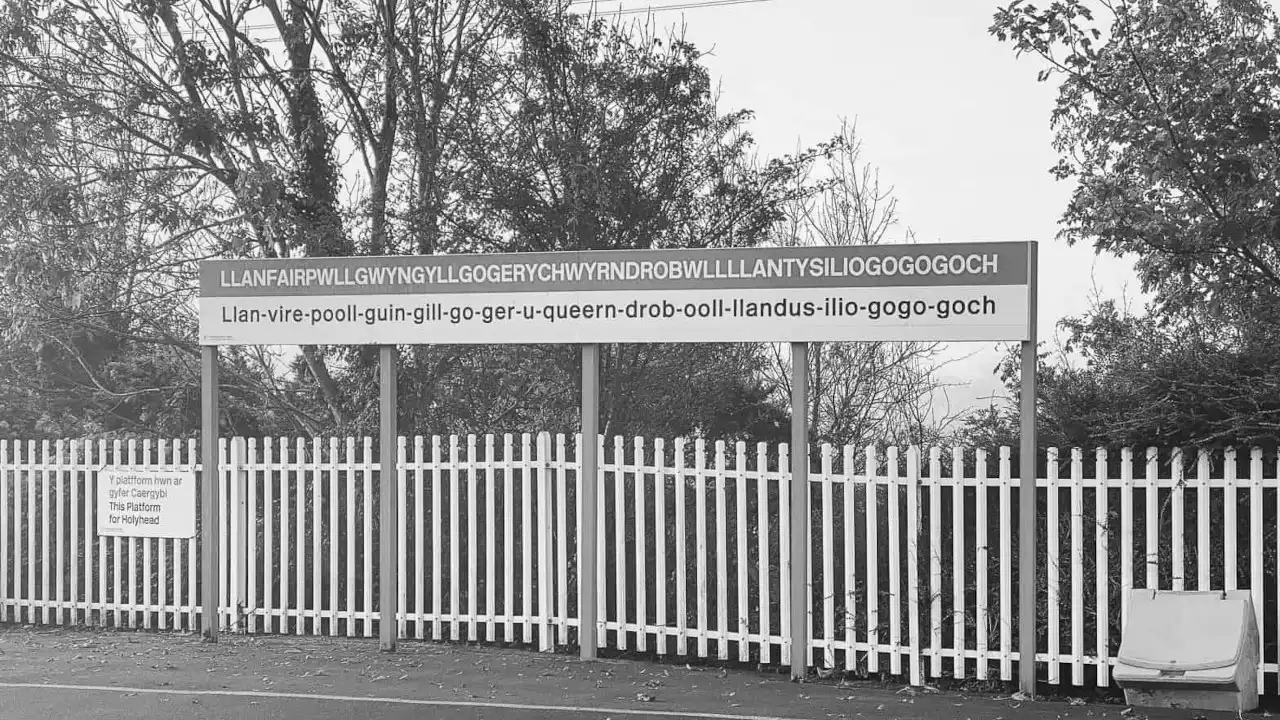
To a beginner, names like Machynlleth, Pontrhydfendigaid, or the famous Llanfairpwllgwyngyll look like a random jumble of letters.
But here’s the secret: Welsh place names are actually very logical.
Unlike many English place names, which have lost their meanings over centuries, Welsh names are almost always descriptive.
They describe the landscape, the history, or who owns the land.
Once you know a few key words, looking at a map of Wales becomes like reading a story about the countryside.
In this guide, I’ll break down the most common prefixes (words that go at the start of a name) so you can start decoding the map yourself.
Table of Contents:
Llan: The most common prefix
If you drive through Wales, you’ll see “Llan” everywhere.
Llan originally meant an enclosure, but over time it came to mean a church or a parish (the area around a church).
Usually, the word Llan is followed by the name of a Saint. So, the formula is simple: Church + Saint’s Name.
For example, Llandudno simply means the “Church of Saint Tudno”.
Here are a few common examples:
- Llanelli: The Church of St Elli.
- Llangollen: The Church of St Collen.
- Llanberis: The Church of St Peris.
Dw i’n byw yn Llandudno.
Pronunciation Tip: Remember that the double “Ll” is a specific Welsh sound. Put your tongue behind your top teeth (like you are saying “L”) and blow air out the sides of your mouth.
Aber: Where the water meets
This is a very important word in Welsh geography because Wales has so many rivers and a long coastline.
Aber means “estuary,” “river mouth,” or the “confluence” (meeting point) of a river. It describes where a river flows into the sea, or where a smaller river flows into a larger one.
- Aberystwyth: The mouth of the river Ystwyth.
- Aberteifi: The mouth of the river Teifi (known in English as Cardigan).
- Abertawe: The mouth of the river Tawe.
You might know Abertawe by its English name: Swansea.
The Welsh name tells you exactly where the city is located geographically.
Dyn ni’n mynd i Aberystwyth yfory.
Caer: Forts and castles
Wales is famous for having more castles per square mile than any other country in Europe. Because of this history, the word Caer appears very often.
Caer means “fort,” “stronghold,” or “castle.”
You will often see this in cities that were old Roman forts or medieval strongholds.
- Caernarfon: The fort in Arfon (the region opposite Anglesey).
- Caerffili: The fort of Ffili (Caerphilly in English).
- Caerdydd: Cardiff.
There is some debate about the exact origin of “Dydd” in Caerdydd, but it likely comes from the River Taff. So it essentially means “The Fort on the Taff.”
Mae Castell Caernarfon yn hen iawn.
Tre/Tref: Towns and homes
In modern Welsh, tref translates to “town.”
However, historically, it meant a homestead, a farm, or a settlement. This is why you will see it in the names of tiny villages as well as larger towns.
When used as a prefix, the ‘f’ is often dropped, so it just becomes Tre.
- Trefor: The town/homestead of Ifor.
- Trefriw: The town on the hill/slope.
- Treorchy: The town on the river Gorchy.
Oes siop yn y dref?
Natural landscape features (Bryn, Cwm, Pont, Pen)
Welsh place names are heavily focused on the physical look of the land.
If you are hiking, these prefixes are very useful because they tell you if you are about to walk up a hill or down into a valley!
Here is a table of common landscape words you will see on signs:
| Welsh Prefix | English Meaning | Example Place Name | Meaning |
|---|---|---|---|
| Bryn | Hill | Brynmawr | Big Hill |
| Cwm | Valley | Cwmbran | Valley of the Crow (River Bran) |
| Pont | Bridge | Pontypridd | Bridge of the earthen house |
| Pen | Head / Top / End | Pen-y-bont | Bridgend (End of the bridge) |
| Nant | Stream / Brook | Nantwich | Stream settlement |
| Ynys | Island / River Meadow | Ynys Môn | Anglesey (Island of Môn) |
Mae’r bont dros yr afon.
A quick note on mutations
When you start looking closely at maps, you might notice something confusing.
You just learned that Pont means bridge. But then you see a town called Pen-y-bont. Why did the P change to a B?
This is called Mutation.
In Welsh, the first letter of a word can change depending on the word that comes before it or its grammatical role. This happens a lot in place names.
- Pont (Bridge) can become Bont.
- Tre (Town) can become Dre.
- Llan (Church) can become Lan.
You don’t need to memorize the complex grammar rules for this right now. Just remember that if a word looks almost familiar but the first letter is slightly different, it is probably just a mutated version of the word you already know.
Summary
Learning these prefixes unlocks the history of Wales.
Instead of seeing random sounds, you will start to see “The Church of St Elli” (Llanelli) or “The Mouth of the Tawe” (Abertawe).